Back 333 serviceable units.
A focused 18-month donation helps rural families cook with biogas, keep assets working, and turn slurry into farm value.
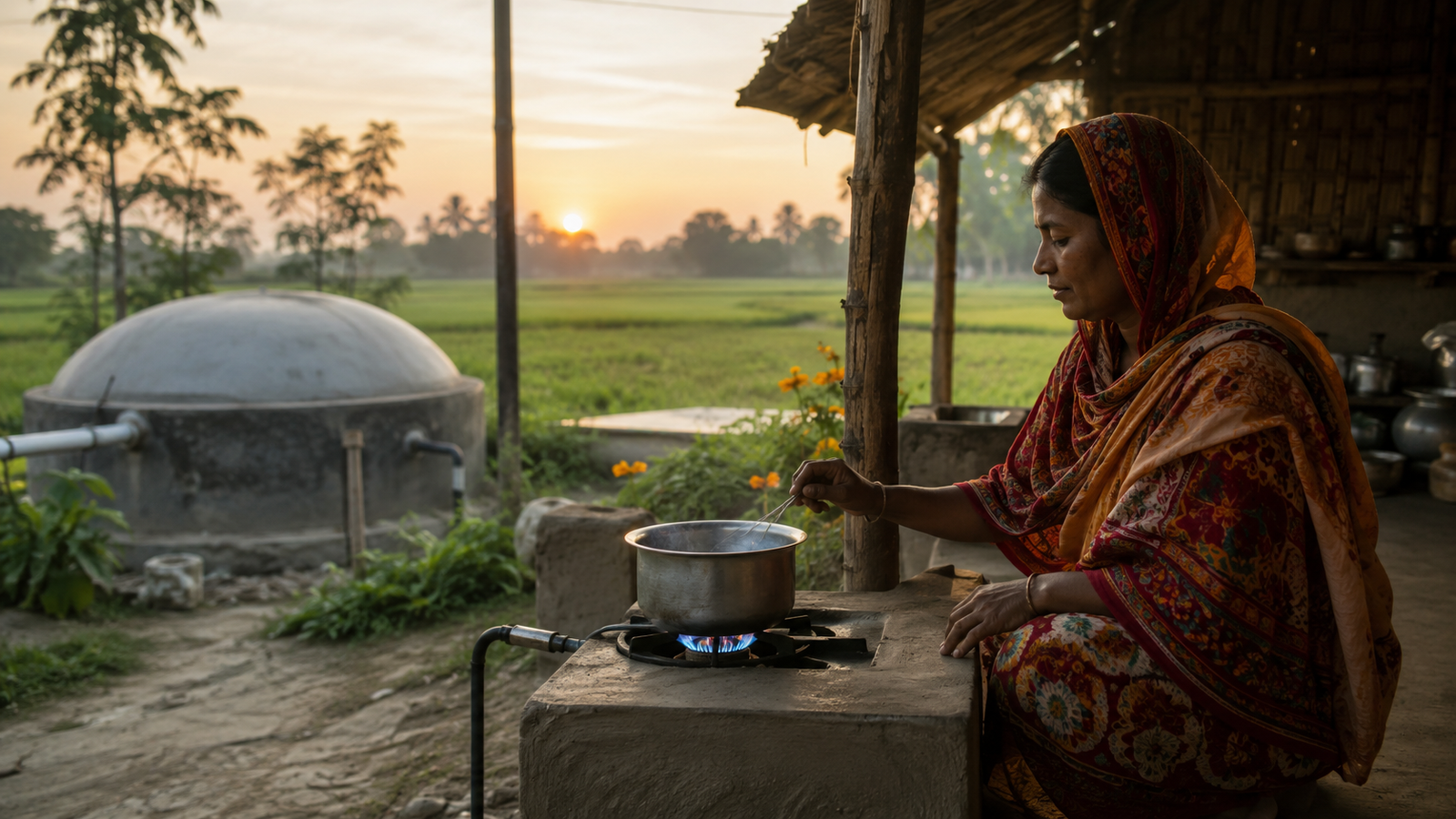
Demand is visible.
The earlier phase achieved approximately 400 installs. Households showed interest. The next step is one serviceable cluster with clear household records.
What the first phase showed
400 units delivered.
Clustered sites made mobilisation, installation, and after-sales support easier.
Households valued help turning digester output into a usable farm input.
15 additional units were reportedly sold at commercial rates post-intervention.
What the donation makes possible
Working cooking systems in 333 eligible homes.
Repair support that keeps the asset useful after installation.
Household savings from fuel displacement.
Paid slurry transactions linked to buyer invoices.
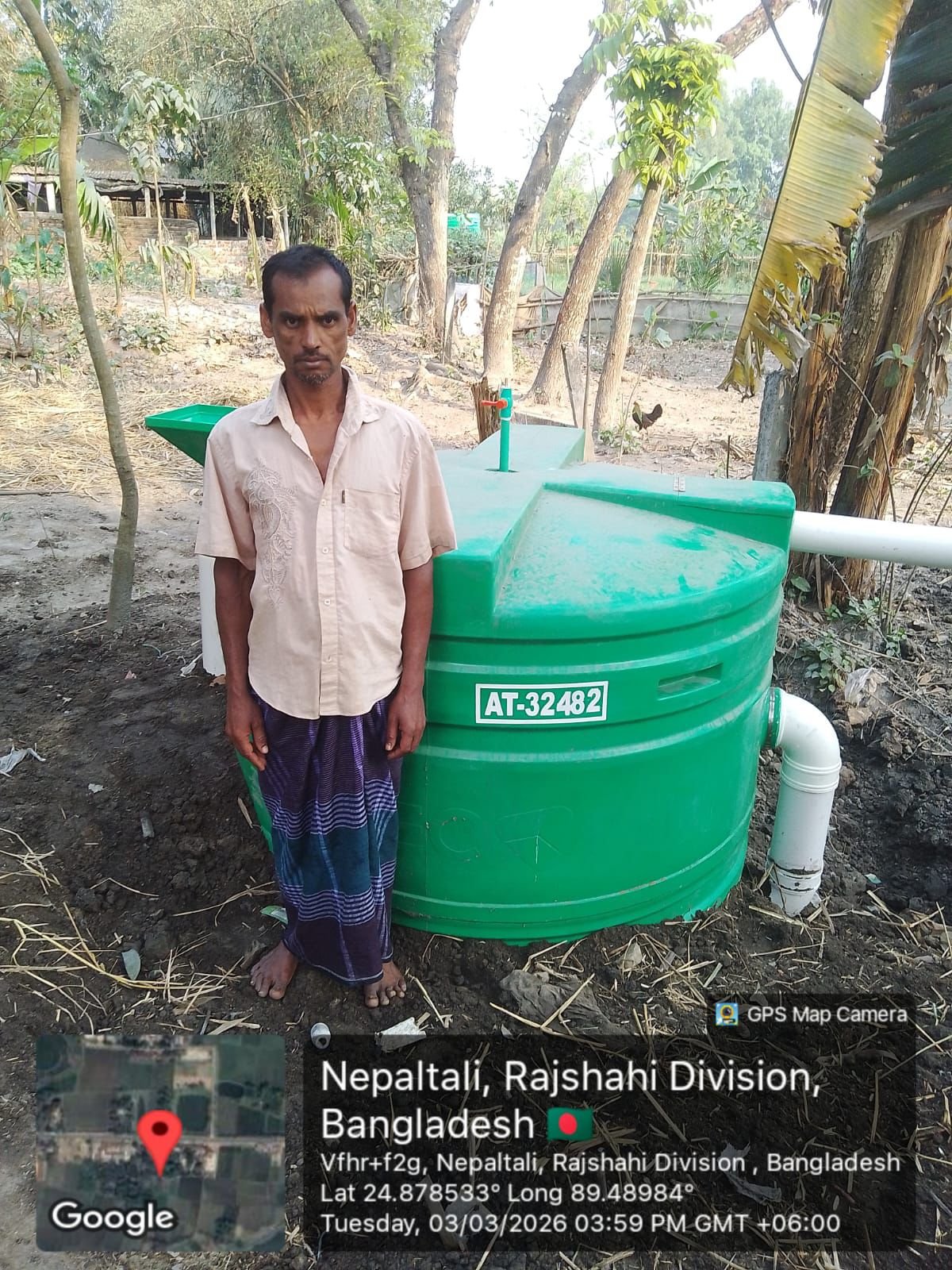
The assets are local.
Geotagged project photos show household-scale systems in rural communities. The next phase adds a simple record for each home.
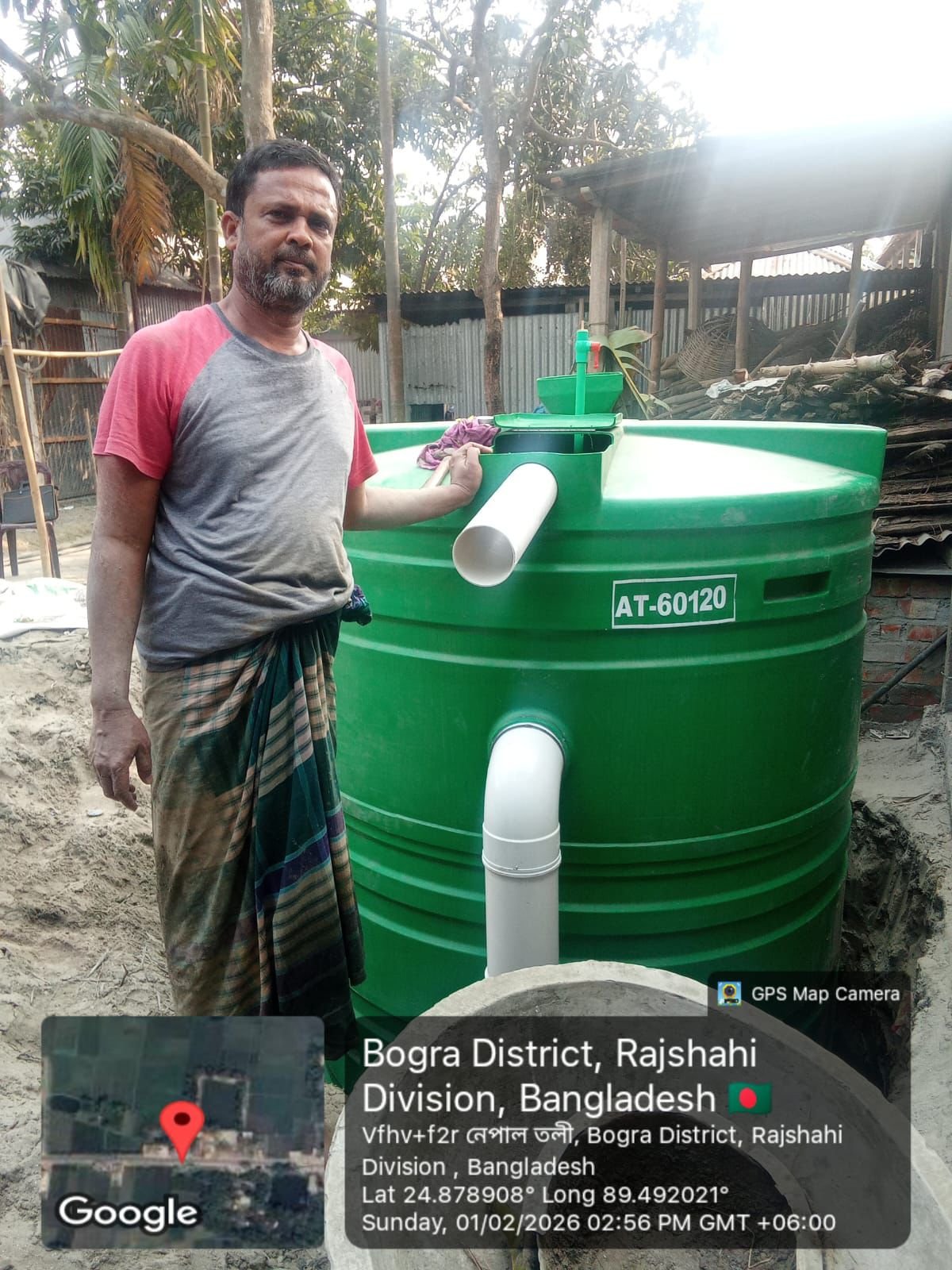
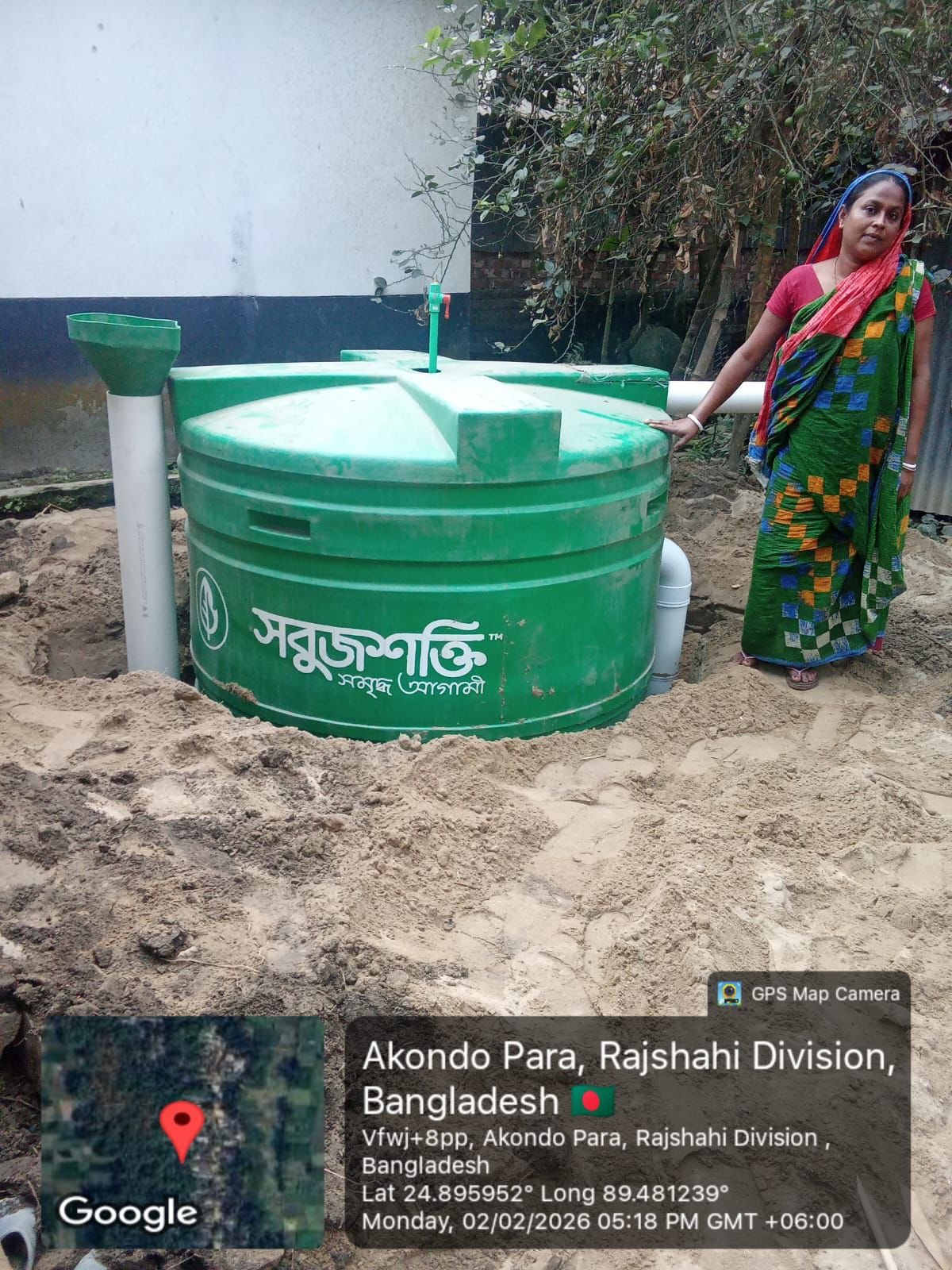
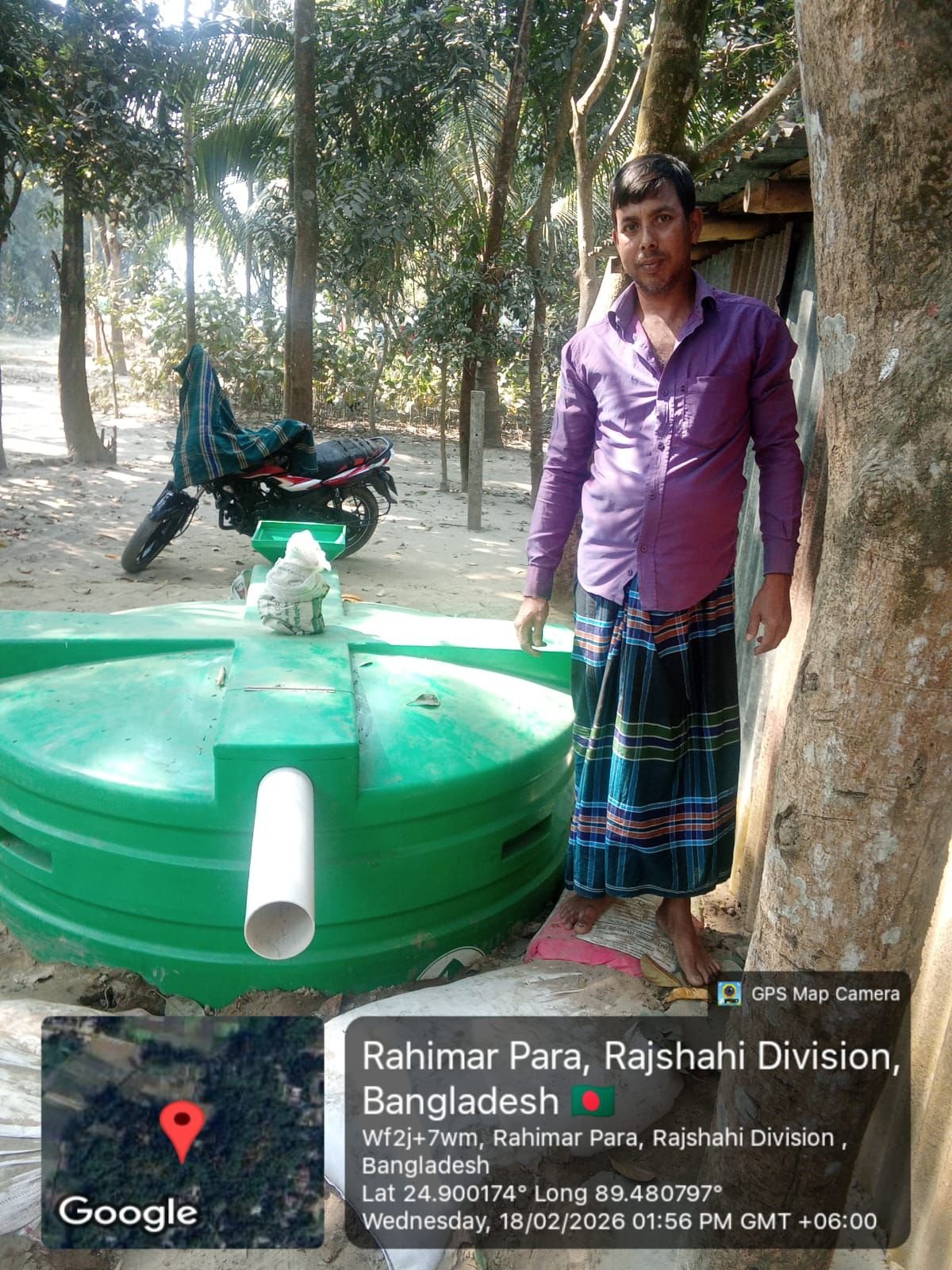
Bangladesh is ready.
The policy base is already in place. The donation turns that opening into working household infrastructure.
Sources: Bangladesh Bank SFD Circular 01/2022; Bangladesh NDC 3.0; IDCOL Annual Report 2023.
Service keeps the asset useful.
A biodigester needs more than installation. The Pabna cluster puts 333 eligible homes within reach of support.
- Long service routes
- Slower repair visits
- Harder collection
- Close service loop
- Faster repair support
- Clear slurry route
Field lesson. Clustered service is easier to manage than scattered delivery.
Co-investment starts here.
City Bank contributes BDT 10m. Households add their share. The result is a BDT 15m programme built around ownership.
Phase I delivery
As per contract: digester, stove, transport + BDT 6,000 slurry tank.
Phase II package
The household share is explicit in the package.
Illustrative slurry value
The next phase measures moisture, nutrients, collection cost and buyer demand.
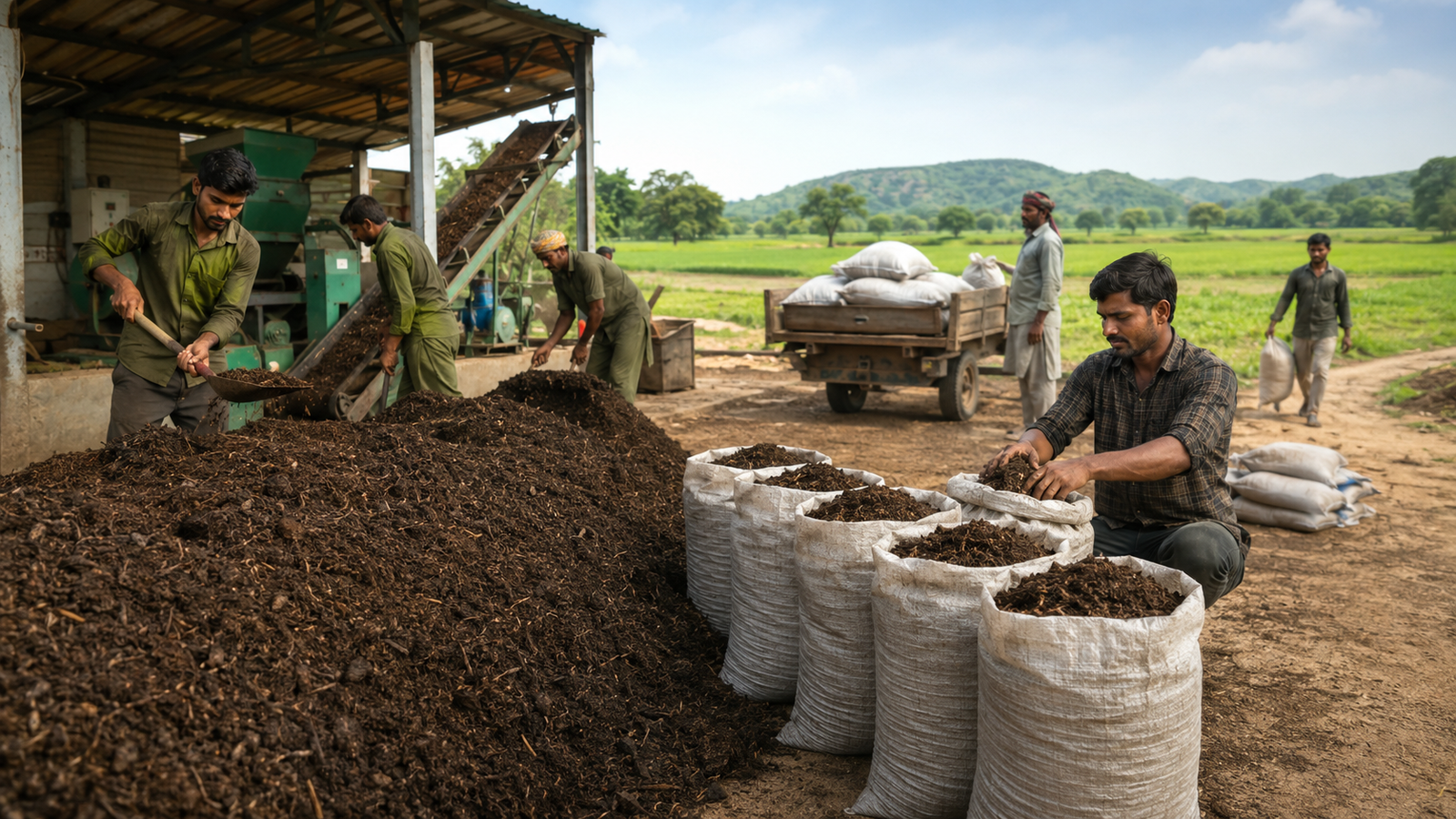
Slurry creates local value.
The donation creates the operating base to measure moisture, nutrients, registration, collection cost and paid buyer demand.
Clear partner roles.
Private capital works when roles are simple. City Bank funds the cluster. Local partners install, service, record and connect slurry demand.
| Institution | Role | Place in the project |
|---|---|---|
| City Bank | CSR capital, oversight and reporting | Donor |
| IDCOL | Dataset received, platform route and eligible PO confirmation | Data received |
| Ekshathe | Household mobilisation, installation coordination and service | Proposed |
| ATEC | Technology, warranty, training and performance data | To contract |
| Cultivera | Project planning and validation | Proposed |
| DPI | Overall coordination, Monitoring and Evaluation | Proposed |
Farmer ownership and any security interest are documented.
Consent, access and retention are agreed upfront.
Slurry purchases and beneficiary distributions use separate ledgers.
Competitive pricing and related roles are disclosed.
Rights, deductions, sale proceeds and household share are agreed upfront.
Support follows progress.
Each installation receives a persistent Asset ID. The programme tracks eligibility, installation, use, repair and slurry transactions.
Set up
IDCOL, PO, contracts, ownership.
Baseline
Eligibility, kitchens, GPS, affordability.
Install
Install, commission, service centre.
Operate
Usage, repairs, slurry transactions.
Review
Independent review and next scale step.
Fund 333 clean-cooking homes.
- Commit BDT 10m through City Bank CSR.
- Mobilise 333 eligible households in one serviceable cluster.
- Support installation, use records, repair logs and slurry transactions.
- Keep ownership, data and off-take terms clear from the start.
A lower cost per working household asset.